![]() | ![]() |
| ![]() |
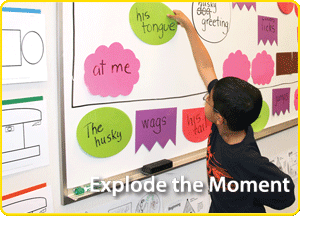
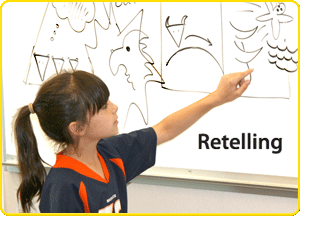
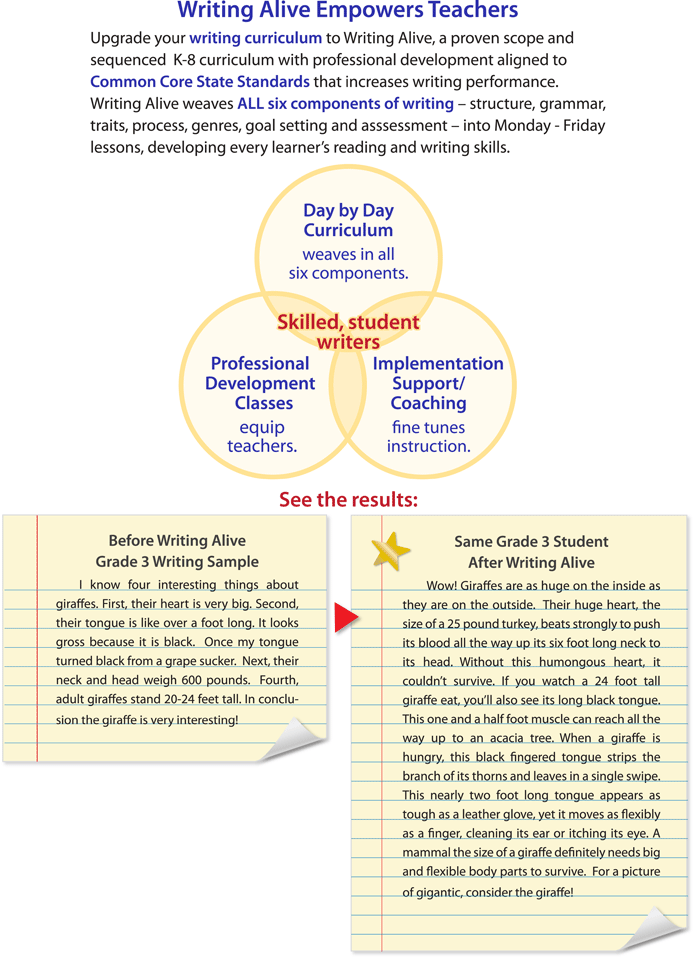
![]() ![]() ![]() | ![]() Writing Alive, a comprehensive writing curriculum and staff development program, empowers teachers with the tools to teach all six components of writing: A Comprehensive Curriculum Writing Alive integrates all six components of writing into grade leveled scope and sequenced instruction, ensuring that no gaps in skills or state standards exist. Writing Alive curriculum is systemic! A common language and set of symbols and planners begin in kindergarten and continue though the grades, building on the skills and language learned in the previous grade and providing sysytemic language and skills. Writing Alive curriculum is systematic! A specifice scope and sequence of skills and genres for each grade level with Monday through Friday direction guides teachers. Assessment tools and writing records enable students and teachers to set goals and continue to build their skills, growing as writers in each grade. All the materials needed to start immediately are at the teachers' finger tips:Essential Curriculum Kit The teacher guide, assessment tools, blackline masters, sentence shapes for students and teacher, plus a selection of instructional tools. Student Books Click here to view more information about these materials. A Staff Development Program Staff development begins with four days of intensive Writing Alive classes based on researched learning strategies. Teachers receive three years of Writing Alive implementation support. Each year takes teachers deeper into the curriculum to create master writing teachers. Writing Alive utilizes a coach model to build ongoing school support. The Six Components of Writing Alive (1) Structures - Writing Alive instruction begins with mastery of the sentence and its structure. It grows to connected sentences, paragraph, composition, story and essay structures. Handwriting instruction is built into the kindergarten and grade 1 curriculum. (2) Grammar - Every Monday teachers deliver scripted, hands-on direct instruction lessons on a skill that is implemented and practiced in daily writing, in sentence styling revision during the week and across the curriculum. Grammar skills follow a prescribed scope and sequence at each grade level. (3) Traits - Teachers model and teach how to improve orgaization, content, word choice, voice, fluency, style, conventions and presentation. Students set goals and assess the traits using rubrics. (4) Process - Teachers and students follow Writing Alive's unique guided, interactive writing process: (5) Modes and Genres - Teachers give students the tools and planners to think about and organize their thoughts for the different modes and genres of writing. (6) Assessment - Teachers and students set goals from the rubrics before drafting and and assess these goals upon completion. The rubrics are diagnostic, helping them grow as writers. |